


Company Profile
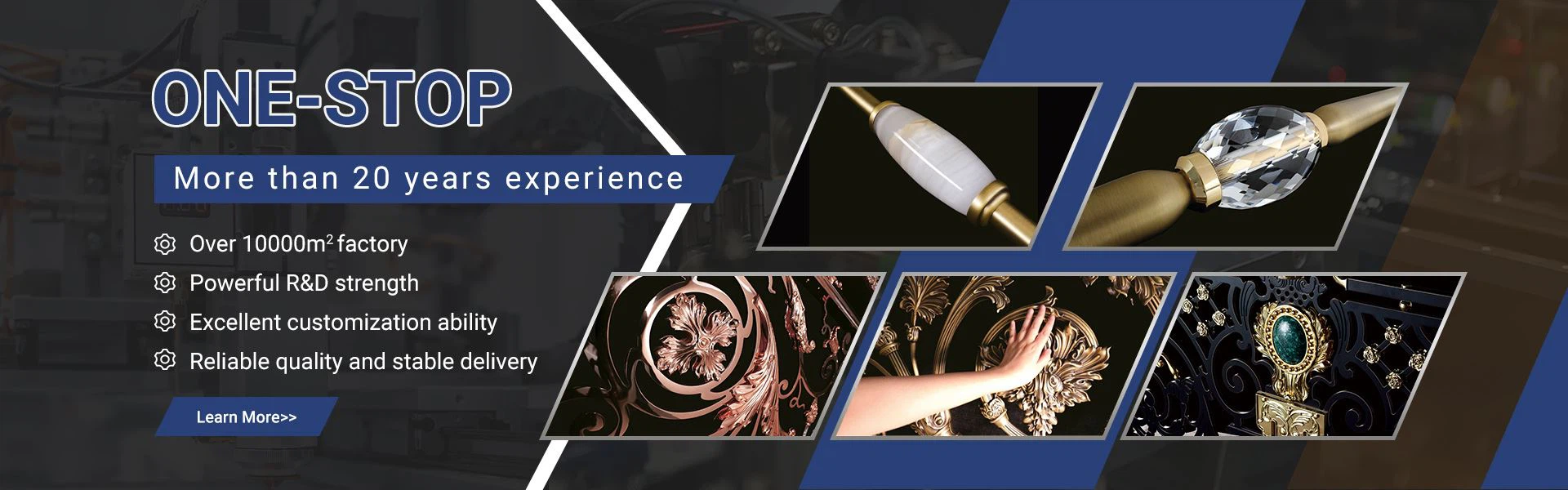
As a powerful building material manufacturer in China, we foshan nanhai ling xiu jia metal products co.,ltd acts as the most important role in the designing, manufacturing and selling on the building materials from stair handrail, to the partition, aluminum outdoor fence, cooper gates and copper furniture, we promise the most expandable products in the industry, and show our perfect combination of science and art.
Why Choose Us
High Quality
With more than 20 years production history, owning Carola, Tiluoke and Meigu 3 main brands for the stair railing products, we keep the leading position on the R&D area for our products, every year we have brand new designs come out which mostly become the hot-sale products in the industry.
Rich Experience
With strictly control on the production processes from designing drafts to manufacturing finished products, we chase the top product quality. And we can provide complete solutions for you to completely satisfy your demands. With convenient use quality, various styles, and high compatibility as well as marketing support, our products are the best choice for distributors or contractors.
Production Market
Our products have popular style and designs for many different countries, there are many hot-sale items and many projects done in middle east countries, middle asia countries, south east asia countries, north america countries. Now already have agents or distributors in country of Russia, Uzbekistan, Vietnam, UAE etc.
Our Service
We will help to analyze the site, suggest right designs, materials and colors etc, with sizes information we can make drawing to show product arrangement and quantities, some customized items can also able to be made with effect photos. Technicians can be sent to the site to do measurements as per needed.

TLK-20-B006 is the one most fancy and luxury type panel railing of our company, shows very thick details of flowers and plant leaves.

TLK-A01 is the one of hot-sale model of panel railing, the last version came out in year of 2011.

TLK-23-A001 is the new design of 2023, made from brass material with big size handrail which is one of most fancy designs of our company.

TLK-A29 came out in year of 2014, made from brass material with flower pattern, it is also one of the hot-sale items.

TLK-21-A001 is one of the flagship item of 2021, made from brass material with peacock leather pattern, it is an unique and ingenious design.

TLK-21-A007 is another special design published in 2021, made from brass material in light luxury style.

The TLK-20-B008 luxury staircase railing is one of most luxury and fancy model of our company, came out in year of 2020.
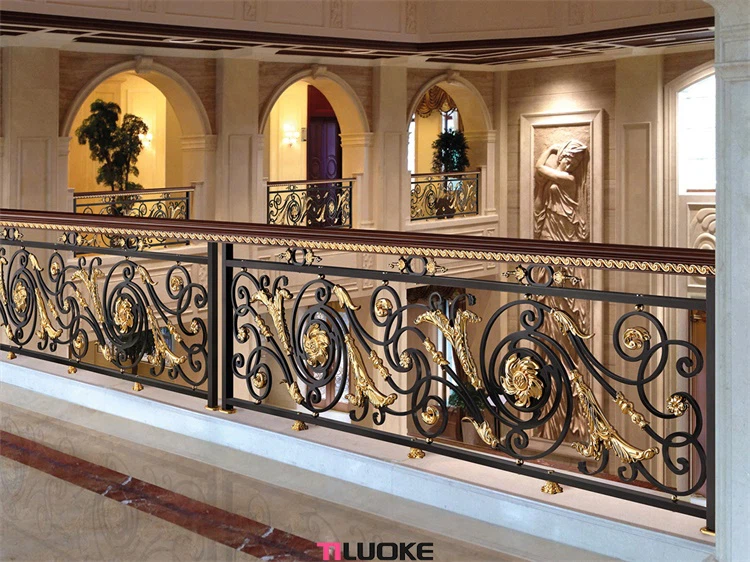
The TLK-20-B009 brass stair handrail released in year of 2020, another beautiful European style panel railing.
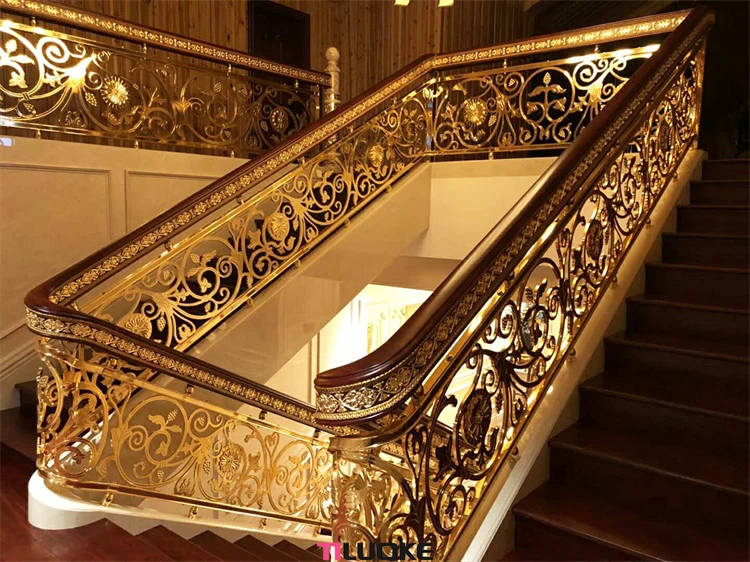
The TLK-A76 brass handrail for indoor place is one very classic model, made from brass material, in European style with plants theme.
What is a Decorative Stair Railing?
A decorative stair railing is a railing designed for stairs, a protective barrier to prevent trips and falls. One or both sides are often exposed or open to a drop in height.
A decorative stair railing is a vertical piece between a railing and other wood or the floor that adds support and safety; a short and decorative post or pillar that supports a top rail. Balusters can be made of wood, iron, stone, and other materials. The term baluster is interchangeable with the word spindle.
Benefits of Decorative Stair Railing
Safety
The best part about stair railings is that they help people not fall. This is good for older people and little kids. Stair railings also keep people safe by acting as a wall between them and the stairs.
Accessibility
Stair railings can help people with problems moving around to use stairs. Handrails can help people who have trouble going up stairs and can also help people who cannot see.
Decoration
Stair railings can make your home look nicer. They can also help people go up and down the stairs safely. There are different kinds of stair railings that you can choose from.
Extra Storage
If you need more storage space in your home, stair railings can be a great solution. You can use the area under the stairs for storage. You could also put shelves or hooks on the railings. This can be a great way to utilize unused space and keep your home organized.
Pet Safety
If you have pets, stair railings can also keep them safe. You can put up gates or barriers to stop your pets from going up or down the stairs. This is important if you have young or old pets who might fall.
Type of Decorative Stair Railing
Metal Railing
Metal stair railing has become a popular choice, but "metal" in and of itself is not very specific since there are several types of metals that might be used.
Wood Railing
Wood stair railings are one of the most popular types of railings. They are typically associated with a regal, traditional look, as in many libraries and historic homes. Because of this, wood stair railings are often used in government buildings and homes that want a higher-end design.
Glass Railing
A newer idea for stair railings is glass. This type of handrailing is a little different than others. Instead of vertical posts of glass like you might see styles with wood or metal, glass designs are usually made with panes of glass.
Spiral Railing
A unique option for stair railings can sometimes depend on the stairs themselves. Spiral staircases, for example, are a particularly distinct design that is often used for smaller rooms that can not accommodate large staircases.
Material of Decorative Stair Railing
Stainless steel:
Stainless steel, also known as galvanised steel or powder-coated steel, is one of the best materials for handrails, super strong and resistant to rust. This resistance comes from a coat of zinc which works to prevent corrosive materials from damaging the metal.
Metal:
Metal handrails are more common in industrial and commercial settings. However, a sleek metal handrail can suit a chic, contemporary home with a minimalist design.
Aluminium:
Aluminium is much lighter in weight than steel, with a lower density. It's also more versatile, able to be easily cut and formed as well as powder coated in different colours. It is an expensive metal, however, and is vulnerable to dents and scratches.
Wrought iron:
Wrought iron provides a particular kind of traditional look due to its extreme popularity in the mid-1800s. Iron is highly malleable, so ornate decoration effects like intricate leaves and scrolls can be added.
Steps for Painting Decorative Stair Railing
When painting a staircase railing, the most important part is to choose the paint brushes you will need. Whether you are painting handrails or painting balusters, it is important to choose a brush that is good for a larger surface and an additional smaller brush that is suitable for detail painting, preferably an angled paint brush. A foam roller can be used but all surfaces must be touched up with the right paintbrush.
To know how to paint stair railings, it is important to know what paints to choose. Because they are a high traffic surface it is advised to use a hard enamel-type paint in satin or semi-gloss finish. Other paint types like matte or flat paints are not recommended because they are harder to keep clean over time.
Before starting to paint your staircase railing, it is important to wipe the staircase clean with a moist rag. When it has dried and the dust and debris have been cleaned, it is important to use a microfiber tack cloth and a degreaser to remove all grime from the surface of the staircase. To paint stair railing with carpet you need to ensure the carpet has been vacuumed and no dust will fly back onto the railing.
Sanding is a crucial step when painting wood stair railings. It is important that the surface you will paint will be smooth and that the varnish will be removed so that the new paint will stick better. Once the sanding is complete, it is recommended to wipe down with a moist rag all the surfaces that were sanded and allow them to dry before painting wood stair railings.
Cleaning up a mess caused by paints, having to scrape paint off surfaces, or having to paint over other surfaces can make painting staircase railings a frustrating task. This can be remedied easily by simply taping off all surfaces that must not be painted. These surfaces include stairs, floors, walls, and balusters if they are being painted a different color from the handrails.
Caulking is another important step when painting staircase railings, especially if you have gaps or cracks in your woodwork between the stairs and the balusters. It is strongly recommended to caulk your staircase before applying the primer paint, however, it can be done between the primer and the finish coat.
Applying primer paint when DIY painting stair railing is important, especially if the paint used is lighter than the existing color of the staircase railing. Some will say that this step is optional, however, you will achieve better results when applying primer when it comes to painting durability.
When painting a staircase railing, it is important to choose the right paint brushes. Once that has been done, you should apply one coat of primer and one coat of finish, however, up to two coats of primer can be applied if necessary. It is crucial to let the paint fully dry before adding another coat.
Once the staircase railing surface paint has fully dried then you can remove the painter's tape and perform touch-ups if necessary. It is important to clean the staircase railing area as well as possible and remove run-away paint blotches that may have accidentally sprayed onto stairs, carpets, or walls. To avoid having to resort to lengthy clean-up sessions once the staircase railing has been painted, the taping step is extremely critical.
How to Measure Stairs and Buy Decorative Stair Railing
The design we chose to replace stair railings lightly exceeds the building codes in many regions. We extended the stair railing beyond both the top and the bottom steps. While this isn't always possible, it allows you to grasp the stair railing sooner and hold onto the stair handrail longer to maintain good balance.
Before you go shopping for your handrails for stairs, measure from the nosing of the top landing to the floor at the bottom of the stairs and add 2 ft. This is the length of stair railing material you'll need. You'll find code-approved handrail and the other materials you'll need at lumberyards and home centers.
Pine and poplar rails cost less. In addition to the stair railing, you'll need wall mounted handrail brackets, a package of two-part, 90-second epoxy, and about 4 ft. of 2×4. Buy enough brackets to install two at the top, one at the bottom and one every 48 in. between the top and the bottom of the stair railing.
How to Install a Decorative Stair Railing
Step 1: Decide on Your Design & Gather Your Materials
Before you start installing, you need to decide exactly what type of railing you want. We will focus on an indoor wall-mounted railing for these instructions, but you can build any railing that works best for your staircase.
Step 2: Take Measurements
It is crucial to get the correct measurements for your grab rail before installing anything. The simplest way to collect this measurement is to ask a friend to stand at the bottom of the staircase with one end of the measuring tape.With the other end in your hand, walk to the top of the staircase. Make sure to keep the tape 3 feet off the ground. The spot where you positioned the ends of the tape is where your railing should begin and end.
Step 3: Clean
This isn't a glamorous step, but you want to make sure the surfaces are cleaned before installing the railing.
Step 4: Attach Flange Fittings & Brackets
The next step is to attach the base flange and the wall-railing brackets. You will need to use your drill to create the holes for these anchors. Next, you can attach uprights to the base flange and then attach the brackets to the uprights.
Step 5: Attach the Railing
Depending on the style of handrail you choose, this step might change slightly. Essentially, you need the railing to the brackets. In some cases, you can easily slip the railings into a hole in the fitting. Then, you can tighten the set screw to secure the railing in place.
Step 6: Install Pipe Caps
Once you've finished installing the handrail, make sure to attach the pipe caps to the ends of each piece of pipe. This is an important safety feature that will keep you from getting scratched by the railing. Use a rubber mallet to hammer these in place.
Step 7: Check and Enjoy
Once you've finished, make sure that everything is screwed in tightly. After your final checks, your new stair railing is ready for use!
Our Factory
As a powerful building material manufacturer in China, we foshan nanhai ling xiu jia metal products co.,ltd acts as the most important role in the designing, manufacturing and selling on the building materials from stair handrail, to the partition, aluminum outdoor fence, cooper gates and copper furniture, we promise the most expandable products in the industry, and show our perfect combination of science and art.

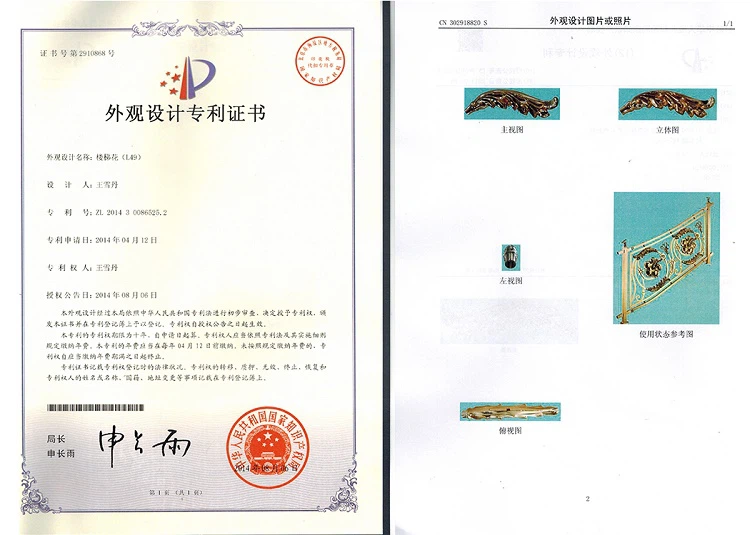
Our Certificate


FAQ
Hot Tags: decorative stair railing, China decorative stair railing manufacturers, suppliers, factory, new bannisters, fancy staircase railings, metal deck stair railing, fancy handrails for stairs, brass handrail, Antique Brass Handrail


