


Company Profile
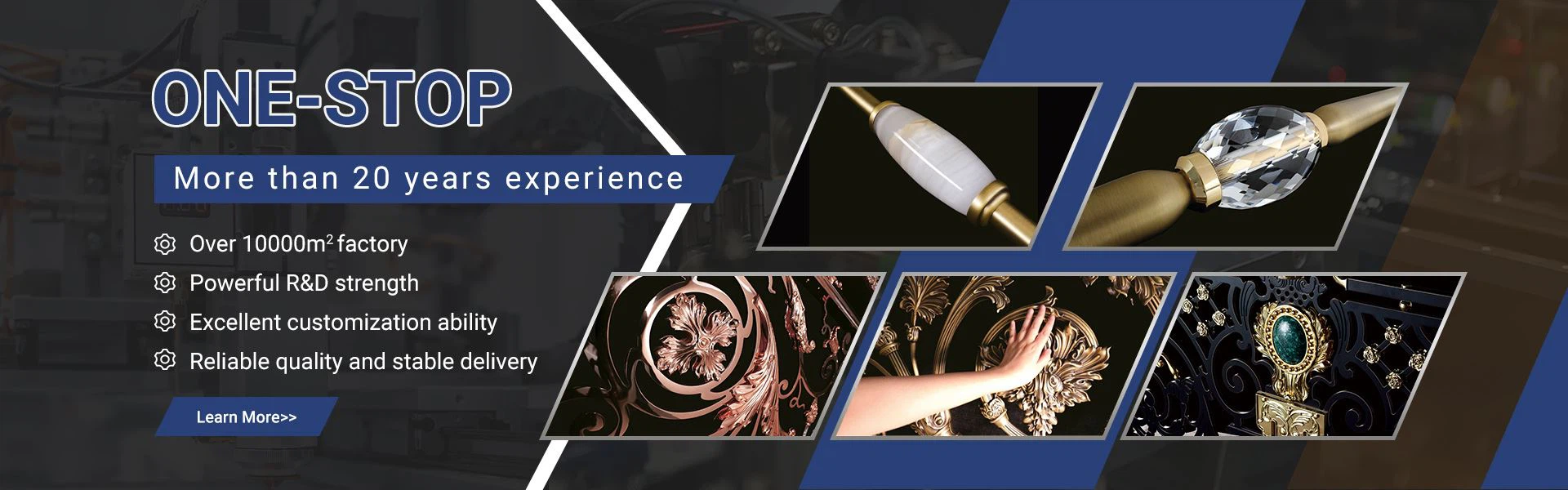
As a powerful building material manufacturer in China, we foshan nanhai ling xiu jia metal products co.,ltd acts as the most important role in the designing, manufacturing and selling on the building materials from stair handrail, to the partition, aluminum outdoor fence, cooper gates and copper furniture, we promise the most expandable products in the industry, and show our perfect combination of science and art.
Why Choose Us
High Quality
With more than 20 years production history, owning Carola, Tiluoke and Meigu 3 main brands for the stair railing products, we keep the leading position on the R&D area for our products, every year we have brand new designs come out which mostly become the hot-sale products in the industry.
Rich Experience
With strictly control on the production processes from designing drafts to manufacturing finished products, we chase the top product quality. And we can provide complete solutions for you to completely satisfy your demands. With convenient use quality, various styles, and high compatibility as well as marketing support, our products are the best choice for distributors or contractors.
Production Market
Our products have popular style and designs for many different countries, there are many hot-sale items and many projects done in middle east countries, middle asia countries, south east asia countries, north america countries. Now already have agents or distributors in country of Russia, Uzbekistan, Vietnam, UAE etc.
Our Service
We will help to analyze the site, suggest right designs, materials and colors etc, with sizes information we can make drawing to show product arrangement and quantities, some customized items can also able to be made with effect photos. Technicians can be sent to the site to do measurements as per needed.

The 20-C003modern vertical stair railing is the design of 2020, made from brass material with modern minimalist style.
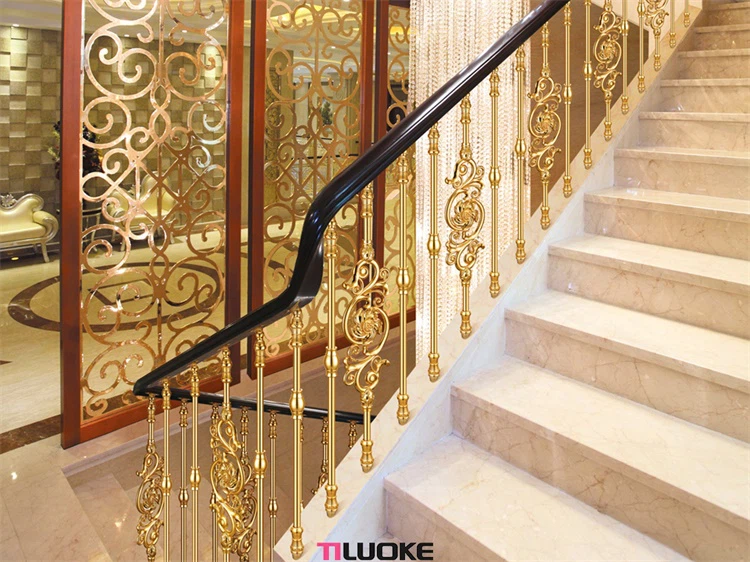
The TLK-A60 verticable deck railing also released in 2014, made from brass material by die casting,one of the most fancy classic european design.

The TLK-A85 metal banister rails is come out in year of 2017, made from brass material with modern light luxury style.

Interior Railings And Banisters
The TLK-A75A interior railings and banisters is also published in 2017, made from brass material with jade stone and rose wood.

The TLK-A75B stair railing and balusters designed and published in 2017, made from brass material with jade stone with beautiful design.
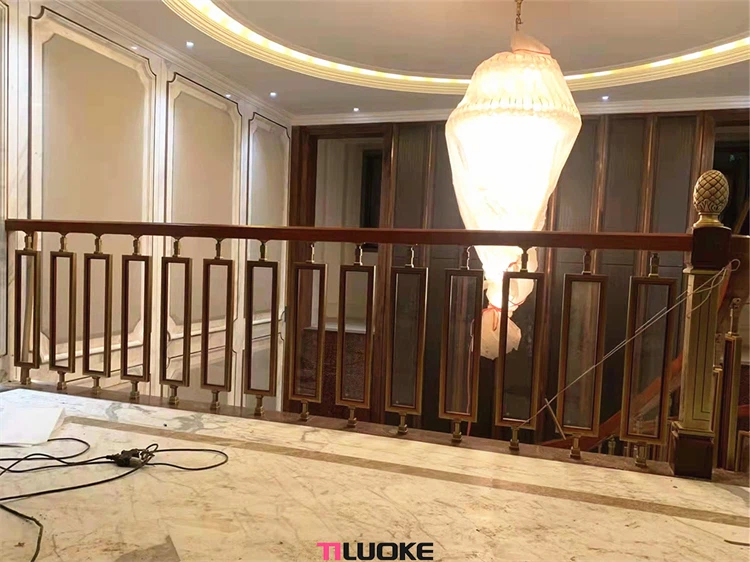
The TLK-A88 internal stair balustrade is come out in year of 2017, made from brass and glass material with modern minimalist style.

The TLK-20-B012 handrail and balusters come out in year of 2020, made from brass material with modern fancy style.

The TLK-20-B015 black stair bannister come out in year of 2020, another fancy model made from brass material.

The TLK-23-B013A metal stair balusters is the new design of 2023, made from brass material with modern minimalist style.
What is Deckorators Classic Balusters?
A handrail, also called a banister, is the part of the staircase that people hold onto for support when going up and down the stairs. The handrail must provide stability and a continuous guide along the stair. A handrail can be made of a variety of materials. It can either be attached to a wall, extend from the side of the stair rail, or sit on top of the balusters (vertical posts) on the open side of a staircase.
A Deckorators Classic Balusters is the barrier which prevents people from falling off the side of the stairs. A Deckorators Classic Balusters must be strong enough to resist breaking if someone falls or pushes on it. Deckorators Classic Balusterss can also be made of a variety of materials and can be fashioned in different styles from a series of simple vertical posts which form a balustrade to modern cable Deckorators Classic Balusters.
Benefits of Deckorators Classic Balusters
Deckorators classic balusters offer design flexibility
Design versatility is another key benefit. Balustrade systems can be used in a variety of locations on your property to enrich its appearance and functionality. A few of the most popular locations for deckorators classic balusters include porches, staircases, balconies, patios, and poolside areas. You can choose Deckorators Classic Balusters of varying width, and height, and can even request a curved design.
01
You can increase your property's value
If you are looking for a fast, cost-effective way to give a subtle lift to your home's value, then a balustrade system is an excellent option. An experienced millwork company can prepare and install the balustrade of your dreams in just a few days. Whether you are planning to sell your home or are simply looking for an easy way to make your home look more valuable, a stone or fiberglass balustrade is a fine addition to your property.
02
They are durable
Stone and fiberglass are two of the longest lasting materials on the market. With the proper care and maintenance, a balustrade made of stone or fiberglass can last a lifetime. The combination of aesthetic appeal and durability makes stone and fiberglass popular choices for balustrade construction.
03
They are easy to customize
An millwork expert can craft a balustrade that fits seamlessly with your architecture, landscaping, and other surroundings. They can be straight, curved, and crafted in varying lengths and heights. You can also request that a balustrade feature decorative elements such as scrolls, initials, floral designs, and geometric patterns.
04
Type of Brass Balustrade
Cedar Balustrade
Cedar is a popular option for those seeking a natural and visually appealing material for their home's balustrade. This type of timber is known for its durability and resistance to moisture, making it an ideal choice for outdoor applications such as timber deck balustrades and external timber balustrades.
Hemlock Balustrade
Hemlock, a popular option for residential and commercial construction in North America, is known for its strength and affordability, with over 4 million board feet of hemlock harvested annually in British Columbia alone.
Hemlock is a sustainable timber with a straight grain and a uniform texture, making it an ideal choice for external timber balustrades, timber deck balustrades, timber stair balustrades, and timber balustrade panels. Hemlock is also a versatile timber with the ability to be painted, stained, or left untreated for a natural look.
Mahogany Balustrade
Mahogany, with its rich color and beautiful grain, is a luxurious and elegant option for external timber installations, including balustrades, adding a touch of sophistication to any construction project. When it comes to timber balustrades, mahogany is a popular choice due to its durability, stability, and resistance to rotting and decay.
Pine Balustrade
The use of pine in balustrades is a cost-effective option that provides a natural and rustic aesthetic to external timber installations. Pine balustrades are popular because of their unique character and affordability. They are durable, easy to work with, and can be stained to match any decor. With proper care, a pine balustrade can last for many years.
Merbau Balustrade
The Merbau Balustrade is a popular choice for external timber installations due to its durability and natural beauty, providing an elegant and timeless addition to any home.
Merbau is a hardwood species native to Southeast Asia, and it is known for its resistance to decay, insects, and weathering.
Material of Deckorators Classic Balusters
Metal
Metal balusters come in a wide range of sizes and styles. Usually made of metal tubes, pipes, rods or bars, these balusters are often incorporated into in a multi-line railing design for egress stairs. Metal balusters can be made of steel, aluminum or wrought iron and are often used with wood stairs as architectural elements.
Wood
Wood is one of the most popular materials for balusters. Wood balusters were popularly used in the past and are associated with more traditional, classic staircase designs. Today, wooden balusters can be combined with other materials, like metal or glass, to create a modern, sophisticated look.
Stone
Natural stone balusters have been used in staircases across the globe for many centuries. Today, stone balusters are still a popular choice. Both natural stone and precast stone balusters are available in a wide assortment of styles to create a staircase with beauty and style.
Concrete
Concrete balusters are usually part of precast concrete balustrade systems. These systems are quite versatile as they available in a wide array of colors, textures and eye-catching designs.
The Difference Between Railings and Handrails
Let's break this down and turn you into a stair expert yourself. Three staircase parts that sometimes get used interchangeably are baluster, banister, and balustrade.
Balusters
These are the vertical pieces holding up, supporting, and safely connecting the stair handrail (railing) to the floor and stair treads of a staircase. The term baluster comes from 17th-century Italy; the Italian word for pomegranate flowers is balaustra. Therefore, baluster was chosen because it sometimes mimics blossoming pomegranate flowers. Balusters can be made of wood, iron, and other materials. The term baluster is interchangeable with the word spindle.
Banister
The banister is actually used as a name for a staircase baluster, although it is commonly referring to the handrail of the structure.
Balustrade
A balustrade is comprised of the railing system, (top rail, balusters/spindles, and often a bottom rail, posts (newels).
As mentioned above, a baluster is the support system of any staircase. More previously known as spindles, balusters hold up the handrail. They can be made of a multitude of materials, such as wood, glass, stainless steel, or wrought iron. Whether for residential or commercial stairs, balusters are an extremely important part of any exterior or interior staircase.
Think of what holds any staircase together, the bones. You may not need an entirely new staircase. Yet, sprucing up stairs with new balusters is like giving an old car shiny, new tire. If you are looking to spruce up a room, think about what a new baluster pattern can do.
Replacing Deckorators Classic Balusters
Despite appearances, the pillars between the treads and banister on a staircase are not there for support. Usually spaced about 4 inches apart, Deckorators Classic Balusters protect people - mostly small people - from tumbling off the side of the staircase. A loose or broken baluster won't jeopardize the whole railing, but fixing it properly is a good idea for the sake of children and pets, not to mention aesthetics.
On a 1-to-10 scale of home-improvement challenges, baluster replacement rates about a 4. The first step is to remove a baluster that's intact and take it to a woodturner to copy. When it comes to demolition projects, pulling out the broken pieces of a baluster has to rank as one of the fastest and tidiest. A baluster is attached with little more than a mortise and tenon rig at the bottom and a couple of nails at the rail.Getting a prototype out in one piece often requires you to remove the return on the end of the tread. To do this, rake a putty knife through the seam between the return and the tread to break any seal, then insert a small cat's-paw and wiggle the return loose. If the tenon is thicker than the mortise path, carefully chisel a larger hole. A less taxing but potentially more damaging method is to simply whack the upper portion of the spindle with a dead-blow hammer to loosen the nails and then ease out the baluster.
When you send the prototypes off to the turner, have extras made. You may need them later.There are usually two or three Deckorators Classic Balusters per riser, each a different length, so send samples of the appropriate sizes. Also, request that the ends of spindles be left long. Although it makes more work, trimming Deckorators Classic Balusters yourself reduces the chances of ending up with a misfit.
Broken, missing or mismatched Deckorators Classic Balusters make a staircase look like a hockey player's grin. Replacing bad Deckorators Classic Balusters with newly turned ones restores a sense of elegance and makes the staircase safe. Scrape off all gunk, old stain, dust and dirt and sand around the tread for a tighter fit. The days apart may also present a good opportunity to refinish the treads.
When your order arrives, sand and paint the Deckorators Classic Balusters. Now comes the challenging part of the project: cutting the top ends to match the slope of the rail. This is why replacing a baluster rates a 4 instead of a 1. To determine where to cut, measure the length with a metal tape and the angle with a bevel gauge. Often in old houses the Deckorators Classic Balusters are no longer plumb. Resist the temptation to reinstall the new ones plumb; they'll just make your staircase look like a mouth full of crooked teeth. Settle for making them parallel or evenly spaced, top and bottom.
Once you've cut the baluster, insert the tenon in the mortise, and then position the top end in the middle of the rail's underside. If the tenon is too big, rasp it down; if it's too small, Raymond suggests wrapping a piece of paper around it and gluing it in place. For a superstrong bond, apply carpenter's glue twice on the top of the baluster before securing it to the banister with two 2-inch nails. Try predrilling the nail holes to prevent the wood, especially hardwood, from splitting. When the baluster is set, nail on the tread return with 21/2-inch hardwood trim nails.
Factors Affecting Spacing
While determining the quantity is a crucial step, it's equally important to consider several factors that affect the spacing between balusters. These factors contribute to both the visual appeal and safety of your balustrade.
Building Codes and Regulations
Be aware of any specific building codes or regulations in your area that dictate the acceptable spacing for balusters. These regulations aim to ensure safety and prevent accidents.
01
Baluster Type and Size
The size and type of balusters you choose will impact the spacing between them. Thicker balusters may require wider spacing to maintain visual balance, while thin balusters may need closer spacing to ensure stability.
02
Balustrade Design
The design of your balustrade plays a significant role in determining the ideal spacing between balusters. A more intricate or decorative design might require closer spacing to showcase its details, while a simple design may allow for wider spacing.
03
User Age and Safety
Consider the age range of the users of your balustrade. Baluster spacing should be adjusted accordingly to ensure the safety of children and avoid any potential entrapment hazards.
04
Balusters Calculation and Layout
This is often confusing because people tend to measure from the back riser to the front of the tread nosing. If you are able to measure at the side of the stairway you can usually place the end of the tape against one riser and measure across the tread "eyeballing" the distance to the riser below it. If you don't have access, such as in the case of a closed or kneewall stringer, just measure one full tread from the back riser to the nosing. Then measure how far the nosing sticks out beyond the riser below and subtract this from the first measurement.
Next, you divide the tread run by the minimum code spacing. Thus you need at least 2.5 balusters per tread to meet code. So, we round up to 3 balusters per tread multiplied by the number of treads and there you have the number of balusters required for your stairway.
Now that you know the spacing you need to know where to start your layout. This can take a little trial and error but you want to make sure that the baluster at the leading edge of each tread (nearest the nosing) is back far enough as to be behind the riser. This ensures the greatest strength and that you do not drill through the nosings when installing. One last detail to consider is your newel post placement. The post at the bottom of the stair is often notched into the tread nosing against the riser, in this case, the first baluster on that tread may be eliminated altogether depending on your spacing and layout.
How to Maintain of Your Deckorators Classic Balusters
Deckorators Classic Balusterss are an essential safety feature for any deck, balcony, or staircase. But not all Deckorators Classic Balusters materials are created equal when it comes to durability, maintenance, and appearance. In this post, we'll explore some common Deckorators Classic Balusters materials and how to care for them.
Wood Deckorators Classic Balusters:
Wood is a popular and traditional choice for Deckorators Classic Balusters. It adds a natural and warm look to any space. However, wood Deckorators Classic Balusterss require regular maintenance to keep them looking their best.
The maintenance includes:
Cleaning: Regular cleaning with mild soap and water will help remove any dirt or grime built-up on the surface of the wood. You can also use a pressure washer but be careful not to damage the wood.
Staining or Painting: To protect the wood from moisture, sun damage, and other weather elements, you need to stain or paint the wood every few years. This will not only protect it but also add to its aesthetics.
Sealing: Sealing the wood can also help protect it from the weather. You should seal the wood every few years to prevent it from drying out and cracking
Our Factory
As a powerful building material manufacturer in China, we foshan nanhai ling xiu jia metal products co.,ltd acts as the most important role in the designing, manufacturing and selling on the building materials from stair handrail, to the partition, aluminum outdoor fence, cooper gates and copper furniture, we promise the most expandable products in the industry, and show our perfect combination of science and art.

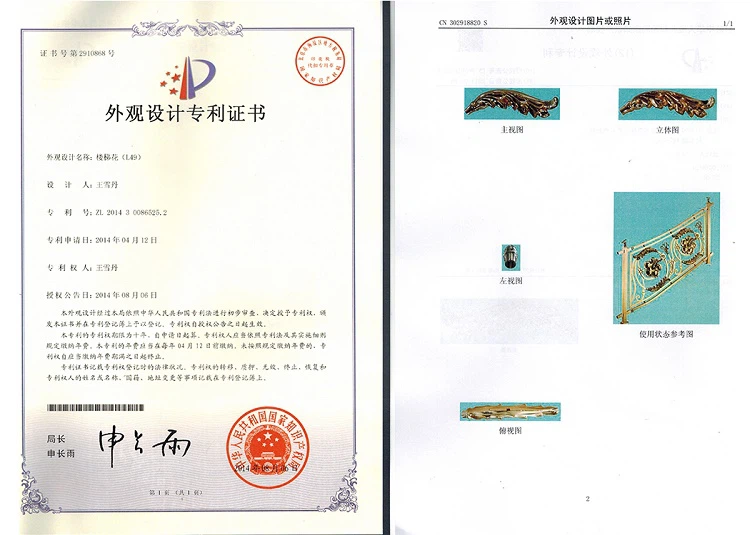
Our Certificate


FAQ
Hot Tags: deckorators classic balusters, China deckorators classic balusters manufacturers, suppliers, factory, brass bannister, Deckorators Bronze Balusters, baluster railing, staircase vertical railing, metal bannister railing, Black Stair Bannister


